Customer pain point
Low-velocity gas in a large duct can leave a conventional insertion probe with too little usable DP—or make a full-bore restriction impractical.
Custom low-loss measurement for large gas ducts
Application-engineered internal and insertion differential-pressure assemblies for low-velocity gas in large circular and rectangular ducts.
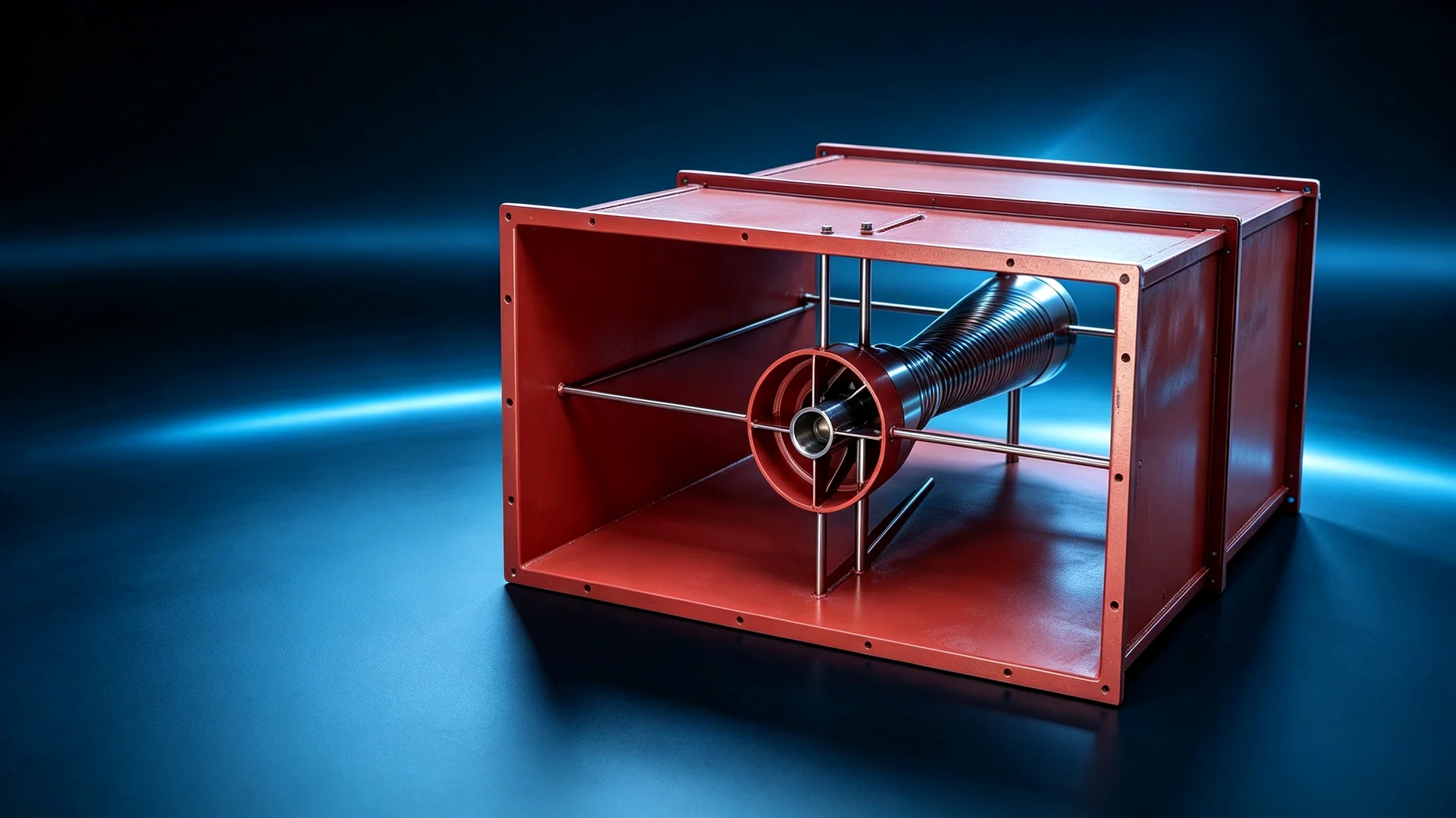
Rectangular-Duct Double-Venturi Flowmeter
Image 1 of 4 · Auto-advances every 3.2 seconds
MANUFACTURER-SPECIFIC LARGE-DUCT METERING
The Shizhong Double-Venturi is a custom differential-pressure sensing assembly for large circular and rectangular gas ducts. It is selected when low gas density, weak signal, limited allowable pressure loss and retrofit access must be solved as one measurement-system problem.
Low-velocity gas in a large duct can leave a conventional insertion probe with too little usable DP—or make a full-bore restriction impractical.
Internal, insertion and integrated assemblies are configured around the actual section, process density, disturbance layout, access and maintenance plan.
Coefficient, usable range, loss and uncertainty are stated from the approved geometry plus representative calibration or site correlation.
Configuration routes
A factory-built measurement section controls supports and alignment. An insertion arrangement can reduce retrofit scope. Rectangular ducts require measured clear dimensions and a profile-validation plan.
Standards boundary
This device is not the classical Venturi tube defined by ISO 5167-4. ISO 3966, ISO 16911 and ISO 14164 may support reference measurement and validation where applicable; they do not assign one universal coefficient, accuracy or straight run to this product family.
Shizhong Double-Venturi Gas Flowmeters address large-duct duties where low gas density, low velocity, limited pressure-loss allowance and restricted retrofit access must be solved together. The manufacturer-specific sensing geometry produces a usable differential-pressure signal without the size and process penalty of a conventional full-bore restriction. Internal, insertion, integrated round-duct and rectangular-duct configurations are engineered around the actual process, duct, disturbance layout, maintenance plan and validation objective. This product is not the classical Venturi tube defined by ISO 5167-4; its coefficient and performance belong to the approved Shizhong geometry and project evidence basis.
Final specifications are confirmed against process data, piping, material, pressure class, applicable code and metrology requirements.
ENGINEERING ANSWER UNITS
These product-specific answers retain the source evidence, calibration limits and conditions where a different measurement route is preferable. Values that cannot be confirmed from the approved source remain subject to project review or pending field test; no unverified value is supplied here.
Dataset v1.5.0; last reviewed 2026-08-24. Evidence IDs are retained in the translation dataset.
Replacement: For large-duct, low-velocity gas measurement, a Double-Venturi can be an alternative to a large-bore orifice or an airfoil-type velocity measurement route. Use it when: The service is low-density, low-velocity gas in a large duct, such as blast-furnace, coke-oven or converter gas or boiler air, and low loss plus stronger differential-pressure signal are important. Do not force the substitution when: Small lines, liquids or steam do not follow this gas-specific device route. High-accuracy custody measurement still requires representative calibration or an approved site comparison.
COMPARISON REPLACEMENT · MEDIUM source confidence
Recommended application: Use a Double-Venturi for low-velocity industrial gas in large circular or rectangular ducts, including blast-furnace, coke-oven and converter gas, when each supplied device can receive flow calibration or an approved site comparison. Prefer another route when: The line is small, the fluid is liquid or steam, or the project requires standardized geometry with direct use of a standard uncertainty. Compare an orifice plate, classical Venturi or another applicable route. Standards boundary: The Double-Venturi is manufacturer-specific and is not an ISO 5167-4 classical Venturi. ISO 3966:2025, ISO 16911-1/-2 and ISO 14164 may be used as reference measurement or validation methods, subject to the approved calibration or site-comparison basis.
RECOMMENDATION COMPARISON · HIGH source confidence
Typical temperature is below 400℃; higher temperature requires a review of materials, supports and instrumentation. The typical series is available up to PN6.4 MPa; the final limit follows the mechanical design and project specification. Temperature and pressure must be assessed together during project design.
TEMPERATURE PRESSURE · MEDIUM source confidence
Circular pipe: DN500—DN4000. Rectangular duct: typically 600 × 600~3600 × 3600 mm. Final supplied dimensions are project-specific and must account for the section, supports, velocity distribution and installation conditions.
DIAMETER RANGE · HIGH source confidence
Stainless steel, carbon steel, Hastelloy and other project-approved alloys are available. Final material selection must account for corrosion, the temperature-pressure combination, support structure and project mechanical design.
MATERIALS LINING · MEDIUM source confidence
This is a manufacturer-specific device, not an ISO 5167-4 classical Venturi. ISO 3966, ISO 16911 and ISO 14164 may support project reference measurement or validation, together with representative calibration and site comparison. Accuracy: ±0.5% after individual flow calibration, stated only as covered by the certificate. Turndown depends on the lowest usable differential pressure, gas density, transmitter rangeability and verified operating range; a no-calibration claim for standardized geometry does not apply.
CALIBRATION ACCURACY · MEDIUM source confidence
Symptom: Differential pressure fluctuates, the reading is biased, or there is no signal. Possible causes: A blocked or leaking pressure tap or impulse line, trapped liquid or gas, deposits or damage in the measurement section, an inlet profile outside the approved conditions, or a transmitter or manifold fault. Action: Check the power supply, manifold and impulse system first, and vent gas or drain liquid as appropriate. Then compare the installation with the approved data; after isolation and depressurization, inspect the measurement section and clean, repair and site-compare it if required.
TROUBLESHOOTING · MEDIUM source confidence
Request a detailed datasheet with dimensional drawings, material certificates and ordering information for Double-Venturi Gas Flowmeters.
Production and documentation schedules are confirmed in the quotation after technical review and drawing approval.
Send your process data for an engineering review and a project-specific next step.