ISO 5167-2 primary element
Standard Orifice Plates — ISO 5167 DP Flow Meter
A standardized differential-pressure primary element for liquids, gases and steam, manufactured with controlled dimensions for repeatable installation.
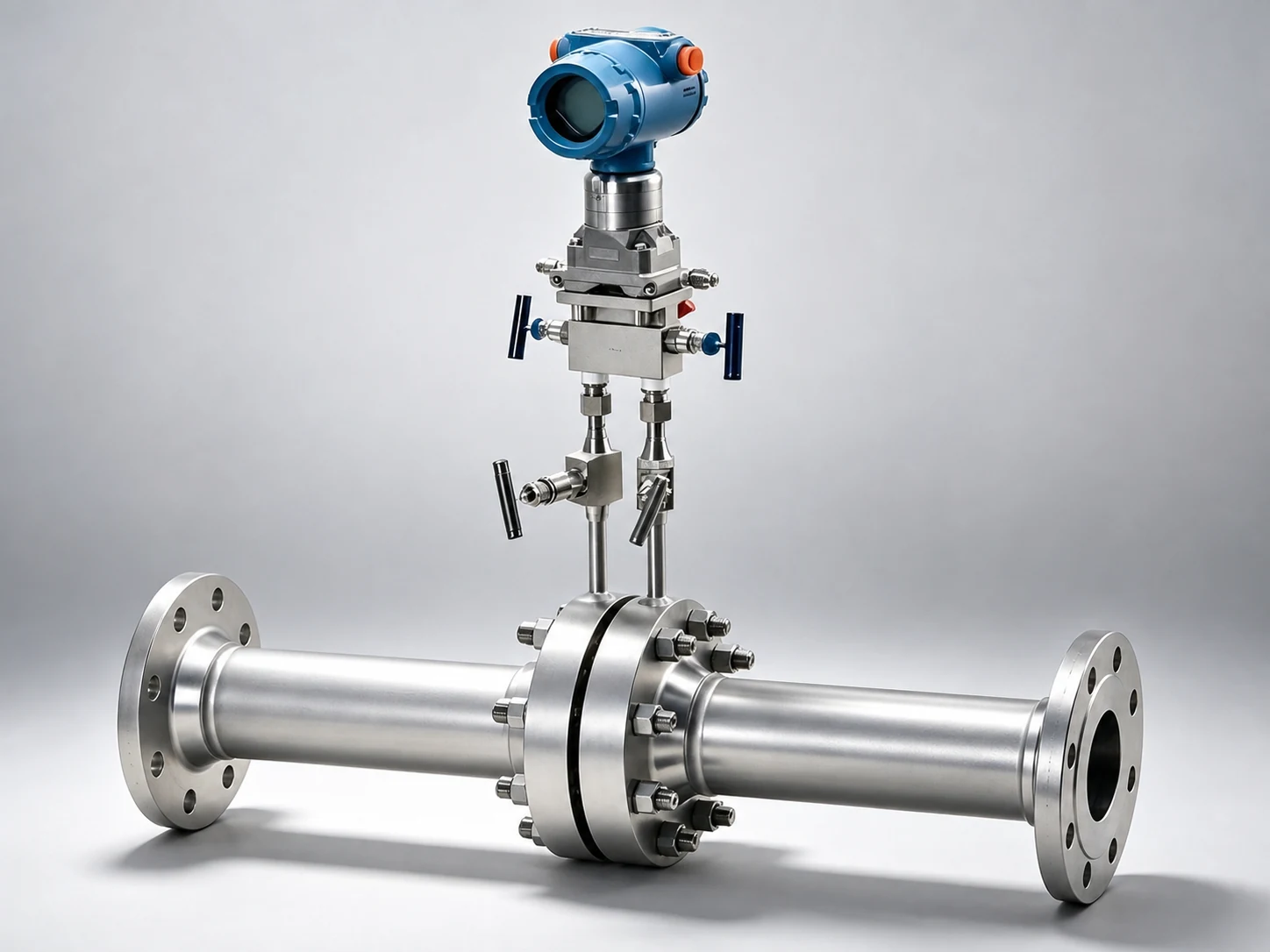
Integrated Standard Orifice Flow Meter
Image 1 of 7 · Auto-advances every 3 seconds
Wide-range measurement built around your process
Per ISO 5167-2:2022, standard orifice plate assemblies provide a robust, well-understood measurement path for process control and eligible custody-transfer applications. Within the ISO scope, Shizhong uses geometrical verification; complete-system flow calibration is provided when the customer requires it. Integrated concealed-orifice assemblies below DN50 are outside ISO 5167-2 and require individual flow calibration.
Key design features
Related Solutions
Typical applications
Oil and gas metering
Steam and feedwater
Chemical process lines
Custody-transfer projects
Final specifications are confirmed against process data, piping, material, pressure class, applicable code and metrology requirements.
ENGINEERING ANSWER UNITS
Application boundaries, selection and troubleshooting
These product-specific answers retain the source evidence, calibration limits and conditions where a different measurement route is preferable. Values that cannot be confirmed from the approved source remain subject to project review or pending field test; no unverified value is supplied here.
Dataset v1.5.0; last reviewed 2026-08-24. Evidence IDs are retained in the translation dataset.
How does a standard orifice-plate flowmeter differ from other meters, and when can it replace them?
Replacement: Where the standardized route applies, a domestic standard orifice assembly can replace an imported assembly such as an Emerson/Rosemount 405 or 1595. An integrated multivariable package can also replace a split imported primary-element and transmitter arrangement. Use it when: The fluid is clean, single-phase natural gas, steam or water; sufficient straight pipe is available; and the project needs standards-based design verification or controlled procurement cost. Do not force the substitution when: The fluid is dirty, solids-bearing or highly viscous at low Reynolds number; straight pipe is inadequate; permanent pressure loss is critical; or the required turndown exceeds orifice capability. Emerson and Rosemount are trademarks of their respective owners; this comparison uses public information available as of 2026-08, is not affiliated with those owners, and is not intended to disparage them.
COMPARISON REPLACEMENT · HIGH source confidence
When is a standard orifice plate recommended, and when should another measurement route be compared?
Recommended application: Use a standard orifice plate for a clean, single-phase fluid with the straight runs required by the standard when the project needs a mature standardized geometry and a traceable calculation route for the discharge coefficient. Within its applicable envelope, the geometry, tapping and installation can be designed to the standard without making individual flow calibration a prerequisite. Prefer another route when: The fluid is dirty, solids-bearing or highly viscous at low Reynolds number; straight pipe is limited; permanent pressure loss is critical; or the required turndown exceeds orifice capability. Compare wedge, V-cone, Venturi or wide-range routes. Standards basis: GB/T 2624.2-2006 and ISO 5167-2:2022.
RECOMMENDATION COMPARISON · HIGH source confidence
What should be checked when a standard orifice flowmeter reads high or low, fluctuates, or produces no signal?
Symptom: The indicated flow is low, high, unstable or absent. Possible causes: A blocked or leaking high- or low-pressure impulse line, reversed plate orientation, a worn sharp edge, a gasket protruding into the bore, or a fault in the three-valve manifold or power supply. Action: Check the power supply and manifold first, then clear blockages, find leaks, and vent gas or drain liquid as appropriate. After isolating and depressurizing the line, verify plate orientation, sharp-edge condition, bore and gasket; replace parts if necessary, then re-zero the system.
TROUBLESHOOTING · HIGH source confidence
Related products
Related technical resources
Need full specifications?
Request a detailed datasheet with dimensional drawings, material certificates and ordering information for Standard Orifice Plates.
Production and documentation schedules are confirmed in the quotation after technical review and drawing approval.
Ready to discuss your application?
Send your process data for an engineering review and a project-specific next step.